

During Catholic Schools Week, my three youngest children, middle school students at St. Francis de Sales School in Spooner, were given a talk on vocations by Fr. Papi Yeruva Reddy. One of them brought home a handout he gave the students. It was titled, “God is Calling – Vocations to Priesthood and Religious Life.”
She said, “Mom, you can throw this away because I’m not going to be any of those.” I concurred on being a priest but asked why she thought she couldn’t consecrate her life to Jesus like her aunt. Just to clarify—religious vocations aren’t foreign to my kids. They’re actually quite familiar, given that I have a brother who is a priest and a sister who’s a consecrated lay woman. They also know I spent five years in the same community as my sister as a young woman.
Scoffing as only a pre-teen can, she said, “It’s just too much work!” and handed me the folded sheet. In all humility, I’ll admit I almost threw the sheet out.
Then, reminded of my own path of vocational discernment—of consecrated life, of motherhood and marriage—I didn’t. That sheet has become like a little beacon calling me to plant seeds of discernment a little deeper through conversations and how we parent.
When I look back over the path of discernment I’ve traveled, which is not neat and clean, pretty or polished, what I see is less about what I did or didn’t do. It was, has been and continues to be all about God.
Dictionary.com defines the noun “discernment” as 1) the faculty of discerning; discrimination; acuteness of judgment and understanding; and 2) the act or an instance of discerning. The verb “discern” is 1) to perceive by the sight or some other sense or by the intellect; see, recognize, or apprehend; and 2) to distinguish mentally; recognize as distinct or different; discriminate. (Note: discriminate here is not distinguishing between groups of people, but noting a difference between things – as in life choices.)
The concrete circumstances of my discernment, or of anyone’s, is much like a couple’s love story. There are some common denominators and similarities, but each is as unique as is each person.
Each person’s vocation is as unique a call as is their own unique creation as a person by God. This uniqueness is what I believe, and have learned from experience, is the fertile soil in which all vocational discernment best takes place. And while my husband and I might not have used the same questions I was presented as a child, we are very intentional about helping each of our children to discover the uniqueness God created in them. This includes the good, the great and the challenges.
Raised in a family where prayer and the sacraments were the bread and butter of family life, I was very receptive to questions posed by the consecrated women who would lead retreats my cousins and I would often attend. They were presented as conversation starters for prayer: God, what did you make me for? What is your plan for my life? Why was I born in this time, this place, this family and with these gifts and desires?
In my experience it was much less focused on a particular outcome—this or that vocation, like choosing a career or college—but a general sense that God wanted me to be happy, and that he placed within me the seeds for that. I just needed to work with him to figure out what they were meant to grow into and how to best care for, fertilize and cultivate them to bear fruit, 10-, 50- and 100-fold.
Fr. Papi’s vocational handout included three Bible verses. Each had a corresponding reflection.
For “Speak, Lord, your servant is listening,” from 1 Samuel 3:1-10, that God often calls people when they are young. For “Follow me,” from Matthew 4:18-22, that God doesn’t call perfect people but willing hearts. For Mary’s response, “Let it be done to me according to your word,” from Luke 1:38, that every vocation begins with a “yes” to God.
Re-reading the priest’s thoughts through the lens of my own life, a process seems clear. First, hear. Then, receive and afterwards respond. Lastly, renew and of course, repeat. Easier said than done, but the surest path to success, as I alluded to earlier, is assured if we step back and let God take the lead.
If parents, grandparents, teachers and other mentors and friends can foster and facilitate our young people’s openness to hear and receive in relationship with God, the response will follow. Again, easier said than done, I know.
Sin and the world are real, but God uses even those to bring about good and no path to holiness is without either (except the Virgin Mary’s path, which was sinless).
Discernment isn’t an abstract dynamic, but it is a discovery, distinction and act of choosing. Too often we think of it in terms of black and white, right versus wrong. If we can see it more as a process, a path, even a pilgrimage that starts and ends with who God made each of us to be, then exits that turn out to be detours aren’t failures. They are learning experiences and even adventures.
I can look back at some of the detours and seeming missteps of discernment in my life and say, well, if I was more mature, had more support or better self-knowledge, then this, or the other thing could have been avoided. Except that I wouldn’t have gotten to where I am without those. My guess is that we can all relate. Discernment does have some more defining moments, but in God’s grand scheme, every piece plays a part.
“Lord, what do you want me to do?” This was the question that Fr. Papi challenged the students to pray with. This is a question that I will be more intentional to cultivate for myself, in my marriage and parenting, in my personal pursuits, job and service. It’s a question we should all be asking ourselves on a regular basis.
Lent offers us the ideal time to hear, receive, respond, renew and repeat. Don’t worry about the outcome—that’s in God’s loving and providential hands. The best thing we can do is to reflect and pray on what helps us listen to him, to receive. Even more importantly, what obstacles are there in our daily lives that prevent us from responding, renewing and repeating our openness to him and the happiness he died to give us.
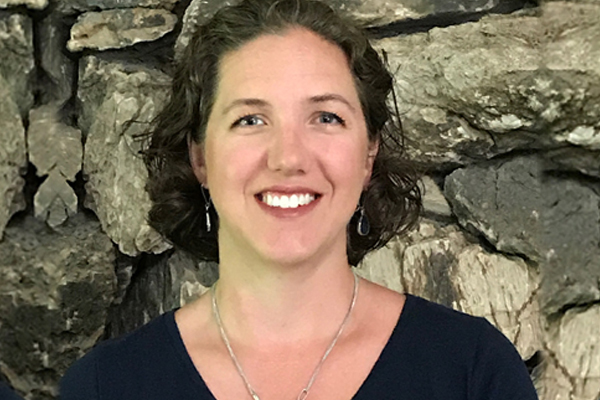
Jenny Snarski
